
India will not tailor its policies to suit US EV maker Tesla, and its laws and tariff rules will be formulated to attract all-electric vehicle manufacturers from across the world to set up a base in the world's fastest-growing economy, Commerce and Industry Minister Piyush Goyal said. Tesla has been seeking an initial tariff concession that would allow it to offset 70 per cent customs duty for cars priced less than $40,000, and 100 per cent for cars of higher value.

Adani Enterprises recently also inked a pact to buy out Linc Energy's royalty rights from the Carmichael coal project for AUD155 million.

Why should India buy olives from Europe when it could do so from the world's largest producers?

India will sign a Comprehensive Economic Partnership Agreement (Cepa) with Japan on Wednesday, setting the stage for free bilateral trade of goods and services.

Culver Max Entertainment, formerly known as Sony Pictures Networks India (SPNI), has terminated merger agreements with Zee Entertainment, which could have otherwise created a USD 10 billion media enterprise in the country.
Prime minister likely to visit Beijing, Shanghai; also President Xi's home province, Shaanxi. Nayanima Basu reports

Leterme contended that there is a need for the United Nations Security Council to adapt to the realities of the 21st century as it requires representation that goes beyond the structures established in the 20th century.

Those who consider the rupee as a proxy for virility have started thumping their chests and dreaming of dethroning the dollar from its coveted position, observes Tamal Bandyopadhyay.

The BSA Gold Star is launched....Ola Enters e-motorbikes Biz... Bajaj, TVS To Enter e2Ws Market...

China had been trying hard to enter the Indian market, without opening its own to Indian products. There is an economic crisis in India-China relations that the Chennai Connect barely scratched the surface, points out Srikanth Kondapalli.
A free trade agreement between Thailand and India is expected to be completed by September this year providing a big boost in trade between the two Asian countries.

While India's export to China stood at only $13.52 billion in 2012-13, its imports from that country aggregated $54.3 billion, leaving a trade deficit of $40.78 billion during the last fiscal.

'India has not integrated into any major trade agreement'.

Developed nations want the WTO to discuss new issues.

India and the US have signed an agreement to promote innovation through increasing cooperation among startups, address regulatory hurdles and share best practices on fundraising by entrepreneurs, an official statement said on Wednesday. The memorandum of understanding (MoU) on enhancing innovation ecosystems through an innovation handshake under the framework of India-US Commercial Dialogue was signed on November 14 in San Francisco. Commerce and Industry Minister Piyush Goyal is in San Francisco.
With India, the last round of talks took place in February 2011.

Both the countries discussed issues of mutual interest like comprehensive economic partnership, high level structured energy dialogue, cooperation in mining and earth sciences, social security agreement, civilian nuclear cooperation at the 6th round of Annual Bilateral Trade Policy Consultations that concluded in Ottawa on Thursday.

Prime Minister Narendra Modi said on Monday that the partnership between India and Germany could serve as an example of success in a complex world as the two sides inked several agreements focused on sustainable development under which India would receive USD 10.5 billion assistance by 2030 to boost the use of clean energy.

You don't want to fight and do trade at the same time. Meanwhile, diplomacy is going on and sometimes solutions to difficult situations do not come in haste, Jaishankar asserted.
The success of the Bali Ministerial meeting of the World Trade Organisation in the first week of December in 2013 will mean that in 2014 countries will identify areas for early conclusion so that within the next two years, the Doha Agenda of the WTO -- which has remained in a limbo for long -- can be concluded.

The Commerce Ministry earlier this week commissioned a study to assess the impact of free trade agreement with South Korea, with which India had a trade deficit of about $9 billion in 2012-13.
Al-Nahayan wants govt assurance on protection of its foray, meets Anand Sharma.
The matter came up for discussion during their wide-ranging dialogue that was aimed at expanding overall ties.
Taking India's Look East policy a step further, Prime Minister Manmohan Singh on Saturday announced visa-on-arrival facility for citizens of Cambodia, Vietnam, Philippines and Laos; and emphasised the need to speed up the finalisation of a free trade agreement in services and investment between India and South East Asian nations.

According to sources, last week's talks between the two countries had hit a roadblock as Japanese trade envoys were unwilling to grant market access to Indian pharmaceuticals and allow professionals, including nurses, to work in the island nation. The talks were held in Tokyo.

Indian fintechs and associated entities are hoping that the Union Budget 2024 will provide a boost and empower firms to extend their reach beyond Tier-II regions, with an emphasis on supporting enterprises led by women. The fintech industry, which has witnessed regulatory reforms over the last year, expects the Budget, scheduled to be presented by Finance Minister Nirmala Sitharaman on February 1, will further encourage financial inclusion, empower micro-small-medium enterprises (MSMEs) with lending solutions, and push for upskilling initiatives for the country's young workforce.

After operationalising FTA in goods last year, both the sides were engaged in widening the base of the pact by including services and investments.

Pragmatism and flexibility is a virtue. An untethered and short-term approach to policymaking is a flaw, argues Mihir S Sharma.

India and the US on Monday committed to further improving bilateral ties, exploring alternate mechanisms for funding renewable energy and actively pursuing the G20 agenda which includes strengthening MDBs and taking coordinated action to deal with climate change. Several issues, including climate action, rising indebtedness in low and middle income countries and digital public infrastructure, figured during a bilateral meeting between Finance Minister Nirmala Sitharaman and US Treasury Secretary Janet Yellen held on the sidelines of the G20 meeting of Finance Ministers and Central Bank Governors. India, Sitharaman said, will "look forward to furthering ... bilateral interests through development cooperation and new investment opportunities through Alternate Investment platforms for renewable energy."
'India should respect Maldivian nationalism and their desire to be not over-dependent on India.' 'India should not behave like a big brother towards Maldives as many times, we tend to behave like that.'
With Beijing remaining intransigent on the withdrawal of additional troops deployed by the People's Liberation Army (PLA) since the deadly border clash in 2020 in eastern Ladakh, India's bilateral ties with China remained frozen in 2023 with no forward movement on the horizon despite several rounds of diplomatic and military talks.

External Affairs Minister S Jaishankar on Monday held wide ranging discussions with Iranian counterpart Hossein Amirabdollahian in Tehran and their discussion focused on the long term framework for India's involvement with the strategically vital Chabahar port and the North-South connectivity project.

In a post on X, Modi said, "Happy to have welcomed @POTUS @JoeBiden to 7, Lok Kalyan Marg. Our meeting was very productive."

It is high time the Indian government signalled discomfort with the UK providing refuge to those accused of financial crimes in India, states Jaimini Bhagwati.
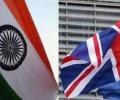
The free trade agreement (FTA) talks with India are no longer working towards a Diwali deadline though negotiations are progressing well, UK Trade Secretary Kemi Badenoch has said as New Delhi expressed confidence on Friday of an "early date" for a mutually beneficial deal. "There are ongoing negotiations as we know on the FTA. There is interest on both sides to see if we can work towards a deal, an FTA, that is beneficial to both the countries at an early date," external affairs ministry spokesperson Arindam Bagchi told reporters in New Delhi. It came as External Affairs Minister S Jaishankar spoke to his UK counterpart, James Cleverly, and referenced the Roadmap 2030 bilateral agreement signed between Prime Minister Narendra Modi and former UK PM Boris Johnson in May last year, with no specific reference to the FTA.
Days before the visit of Chinese President Hu Jintao next week, the government has approved the signing of a Bilateral Investment Promotion and Protection Agreement with China.
 © 2026 Rediff.com - Advertise with us - Disclaimer - Privacy Policy - Sitemap - Feedback - About us - Terms of use - Grievances